
Conditions

What Dr. Boody treats, and what each one is.

Dr. Boody provides surgical care of the cervical, thoracic, and lumbar spine for adults and adolescents, from minimally invasive procedures to complex revision. Each condition below gets the same three answers: what it is, what causes the symptoms, and when surgery is considered. Most are managed without an operation first.

Go to the emergency department now for new bowel or bladder changes, numbness in the saddle area (inner thighs, groin, buttocks), or weakness that is getting worse over hours or days. These are not symptoms to read about first.

Neck

The cervical spine.

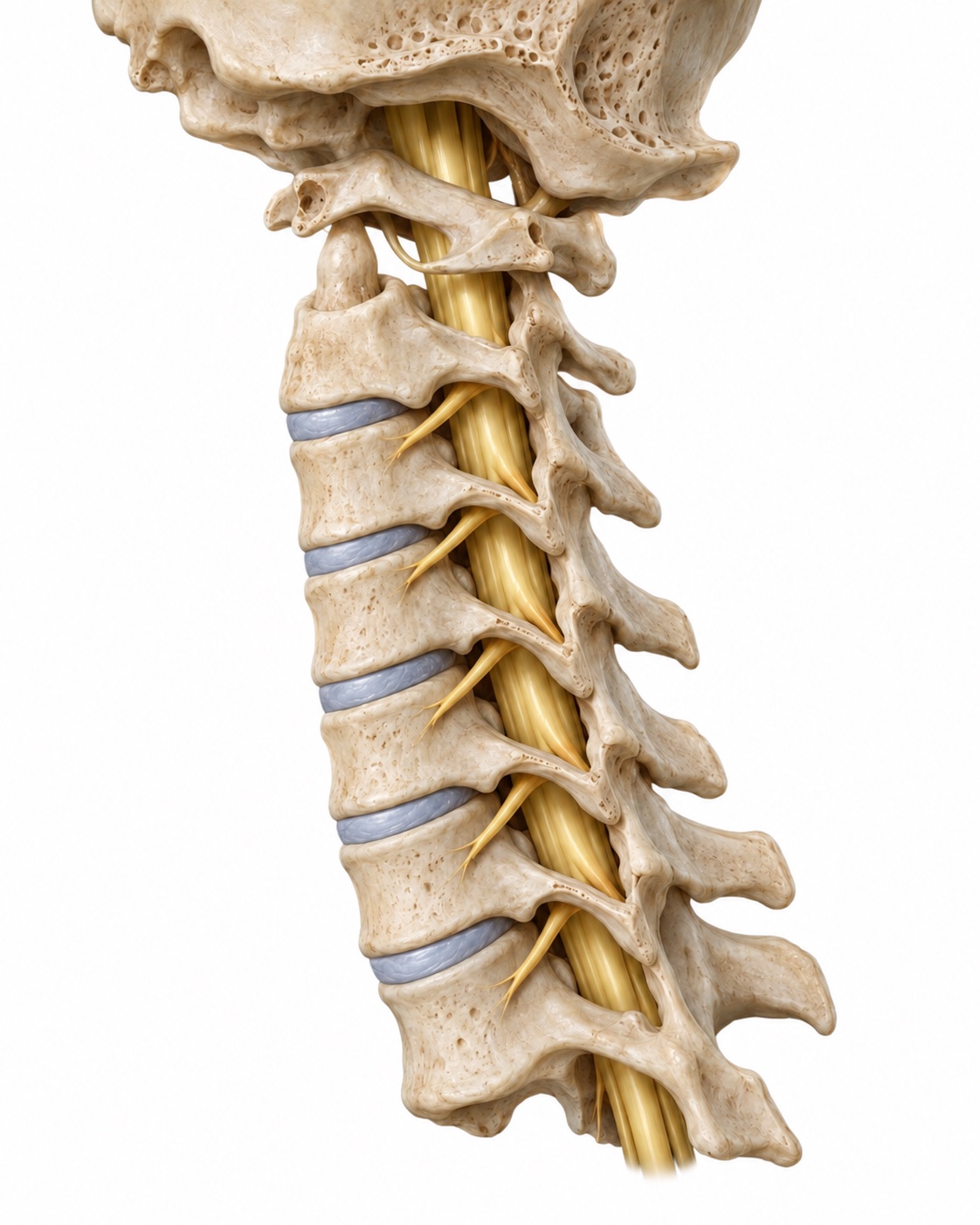
Seven vertebrae, the spinal cord running through them, and eight pairs of nerve roots leaving between them. Whether the nerve root or the cord itself is pressed decides almost everything about the diagnosis and the urgency.

Simplified teaching models show the relevant anatomy. Images labeled “anatomy” show the region, not the specific condition.

Cervical anatomical model showing nerve roots leaving the neck
Neck and nerve roots

Cervical radiculopathy

A pinched nerve in the neck can cause pain, tingling, or weakness down the arm.

Symptoms and treatment decisions: Cervical radiculopathy

What is it? A nerve root pressed as it leaves the neck, usually by a herniated disc or a bone spur. Each root supplies a specific part of the arm, so pain, tingling, or weakness follows a predictable path down the shoulder, arm, or hand, and the pattern tells the level.

When is surgery considered? Most cases settle with time, physical therapy, medication, and sometimes an injection. Surgery is discussed for weakness, symptoms that have not settled after conservative care, or pain that is not tolerable.
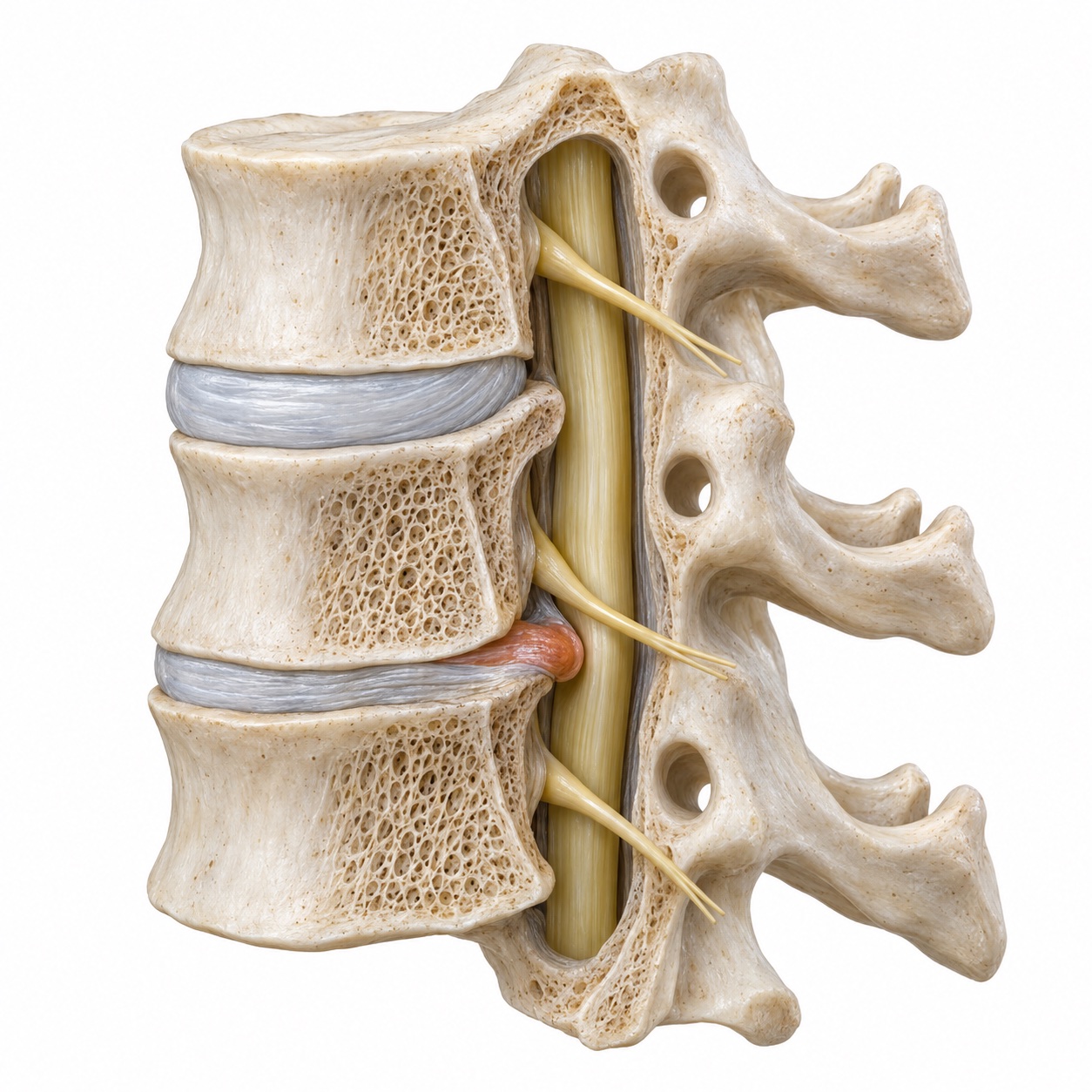
Cervical model with a disc bulge beside the spinal cord
Cord pressure example

Cervical myelopathy

Pressure on the spinal cord can affect hand coordination, balance, and walking.

Symptoms and treatment decisions: Cervical myelopathy

What is it? Pressure on the spinal cord itself in the neck, from disc degeneration, bone spurs, thickened ligament, or OPLL. Because the cord carries signals to the whole body below, symptoms are broad: clumsy hands, changed handwriting, an unsteady walk, and sometimes bladder urgency. Neck pain may be mild or absent.

When is surgery considered? Unlike a pinched nerve, myelopathy does not tend to improve on its own, and function lost while waiting is often not recovered. Once symptoms are present, surgery to decompress the cord is usually recommended to stop progression. Dr. Boody has published on when compression seen on MRI should be treated.

Illustrative cervical spine anatomy with the spinal cord visible
Cervical anatomy

OPLL

A ligament in front of the spinal cord gradually turns to bone and can narrow the canal.

Symptoms and treatment decisions: OPLL

What is it? A ligament that runs down the back of the vertebral bodies, directly in front of the spinal cord, gradually turns to bone. As it thickens it narrows the canal, often across several levels, and can press on nerve roots, the cord, or both. It is often found on a CT ordered for another reason.

When is surgery considered? When the cord is compressed and there are myelopathy symptoms, or when radiculopathy does not settle. Whether the decompression is done from the front or the back depends on how many levels are involved and the alignment of the neck. Dr. Boody co-authored a review of cervical OPLL with Dr. Alexander Vaccaro (International Orthopaedics, 2019).

Low back

The lumbar spine.

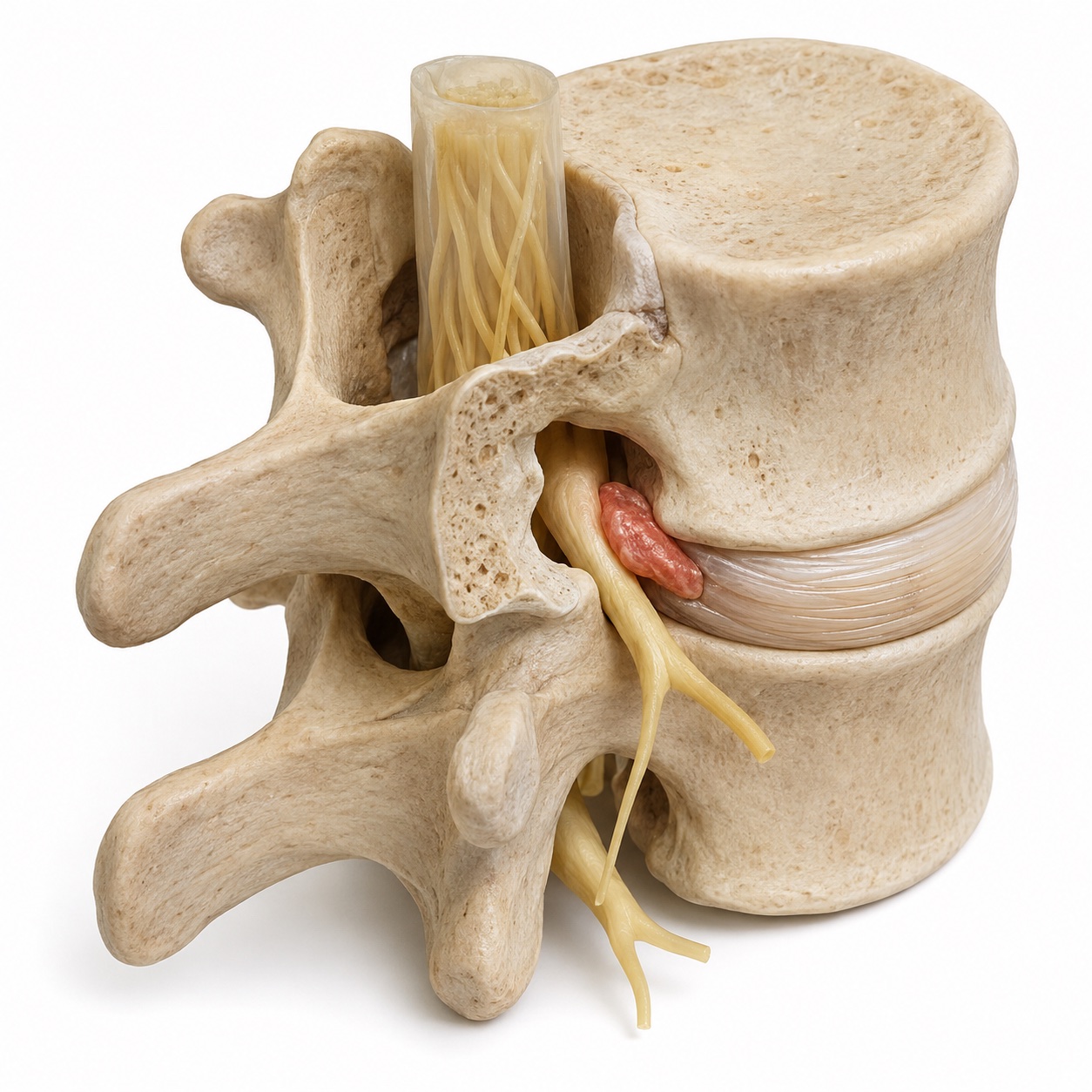
Five large vertebrae carrying most of the body's weight. The spinal cord has ended above this level; what runs through the lumbar canal is a bundle of nerve roots heading to the legs. Leg symptoms point to a nerve, not to the back muscles.

Lumbar model showing a red disc fragment beside a golden nerve
Disc and nerve

Sciatica and herniated disc

Disc material can press on a nerve root, causing pain or numbness down the leg.

Symptoms and treatment decisions: Sciatica and herniated disc

What is it? The soft center of a disc pushes through its outer wall and presses on a nerve root. The root's territory runs down the buttock and leg, usually below the knee, which is why the leg often hurts more than the back. Numbness or weakness in the same territory means the nerve is being pressed hard enough to affect function.

When is surgery considered? Most herniations shrink and the pain settles over weeks to months without surgery. A microdiscectomy is considered for persistent pain that limits life, progressive weakness, or a large herniation. For a disc fragment sitting out to the side of the canal, Dr. Boody uses a far lateral approach that reaches the nerve without disturbing the facet joint.

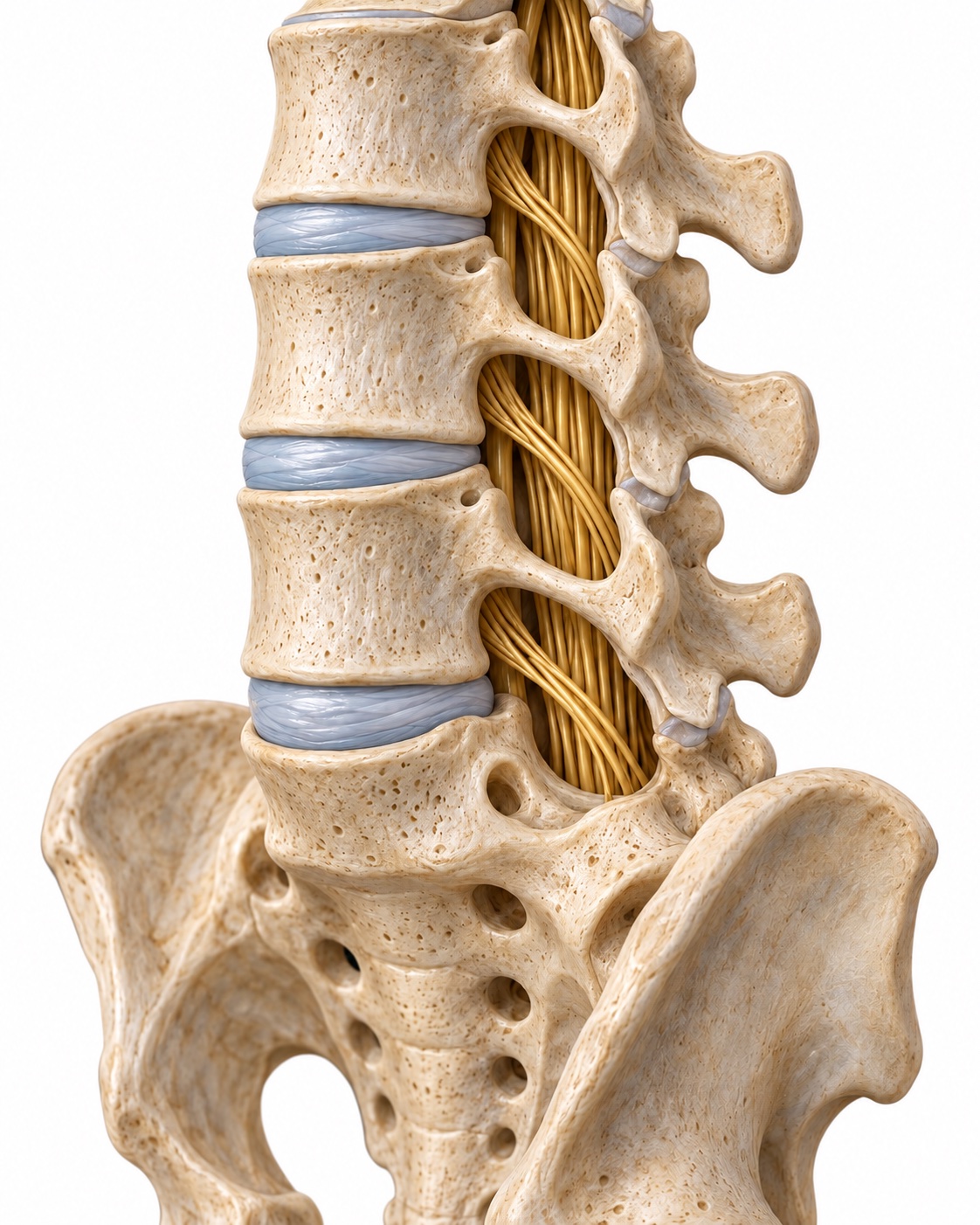
Lumbar anatomical model showing the nerve roots within the canal
Lumbar anatomy

Lumbar spinal stenosis

Narrowed space for the nerves can cause leg symptoms with standing or walking.

Symptoms and treatment decisions: Lumbar spinal stenosis

What is it? Narrowing of the canal or the openings the nerves leave through, from arthritic facet joints, thickened ligament, and bulging discs. The classic symptom is heaviness, aching, or numbness in the legs that comes on with walking or standing and eases when you sit or lean forward on a cart.

When is surgery considered? When walking distance is limited enough to affect daily life and therapy, medication, and injections have not helped. The operation removes what is narrowing the canal. A fusion is added only when the level is unstable or slipping.

Illustrative lumbar vertebrae, discs and nerve roots
Lumbar anatomy

Spondylolisthesis

One vertebra slips forward relative to the one below, sometimes crowding the nerves.

Symptoms and treatment decisions: Spondylolisthesis

What is it? One vertebra slips forward on the one below it. In adolescents and young adults the cause is usually a stress defect in a small bridge of bone at the back of the vertebra (isthmic spondylolisthesis). In adults over 50 it is usually worn facet joints that no longer hold the level in place (degenerative spondylolisthesis). The slip narrows the space for the nerves and can cause back pain, leg pain, or both.

When is surgery considered? When nerve symptoms persist despite conservative care, or when the slip is unstable on flexion-extension X-rays. Because the level is moving, decompression alone can make it worse; the usual operation is decompression with a fusion of that one level, often a TLIF, which can be done through small incisions.

Illustrative model of lumbar spine anatomy
Lumbar anatomy

Lumbar facet cysts

A fluid-filled cyst from a worn joint can press on a nearby nerve root.

Symptoms and treatment decisions: Lumbar facet cysts

What is it? The facet joints at the back of each level are lined with a membrane that can balloon out into a fluid-filled cyst when the joint is arthritic. The cyst sits inside the canal next to a nerve root and can cause sciatica or stenosis-type symptoms exactly like a disc herniation would.

When is surgery considered? Injections and aspiration help some patients, but cysts often refill. Surgery removes the cyst and decompresses the nerve. The open question is whether the joint that produced the cyst needs to be fused; Dr. Boody's 2021 study in Clinical Spine Surgery asked exactly that, and his answer depends on whether the level shows instability.

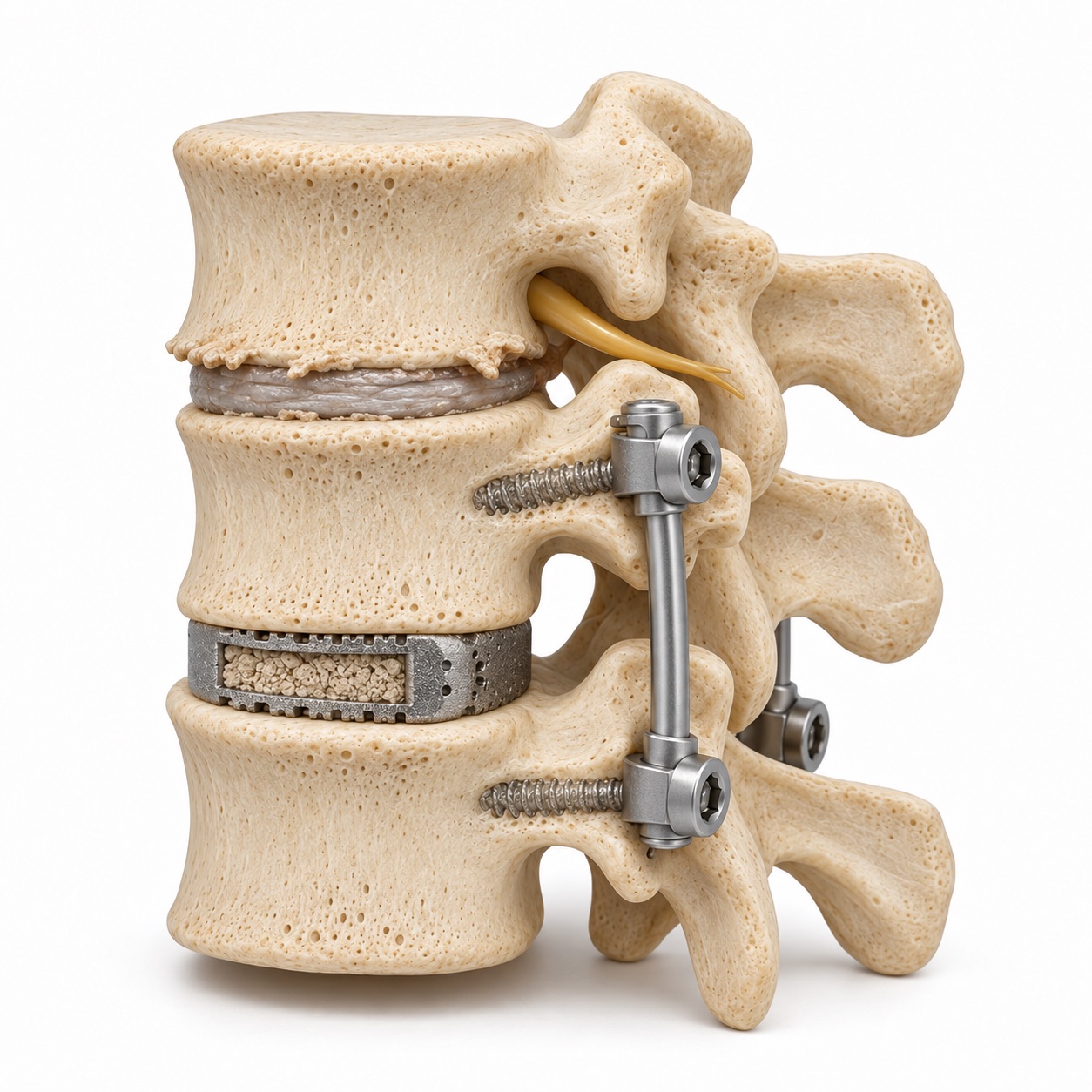
Model showing a narrowed disc above an existing lumbar fusion
Wear beside a fusion

Adjacent segment disease

A level beside a previous fusion can become a new source of pain or nerve symptoms.

Symptoms and treatment decisions: Adjacent segment disease

What is it? After a fusion, the level directly above or below it takes on more motion and load, and it can wear out faster than it otherwise would. The result, often years later, is new pain or nerve symptoms at a level that was healthy at the time of the first surgery. It happens in the neck as well as the low back.

When is surgery considered? When the new level is causing nerve compression or instability that does not respond to conservative care. Dr. Boody has studied whether restoring normal segmental alignment at the first fusion lowers the risk, and how patients do a decade after fusion versus disc replacement.

Injury and infection

When the spine is damaged from outside.

Fractures, spinal cord injury, and infection share a first question: is the spine stable, and is anything pressing on the nerves? Dr. Boody edits the spinal trauma section of The Textbook of Spine Surgery, 4th edition.

Illustrative model of a compressed wedge-shaped vertebra
Fracture example

Spine trauma and fractures

A broken vertebra needs assessment for stability and pressure on the nerves or cord.

Symptoms and treatment decisions: Spine trauma and fractures

What is it? A broken vertebra in the neck, mid-back, or low back after a fall, crash, or sports injury, or from weakened bone. The first question is stability: whether the injury has damaged the structures that hold the spine in line and protect the cord. A CT usually answers it.

When is surgery considered? Many fractures are stable and heal in a brace with follow-up X-rays. Surgery is considered when the spine is unstable, when bone has pushed into the canal, when the fracture is causing deformity, or when there is any nerve or cord injury. Stabilization can often be done with percutaneous screws through small incisions.

Cervical anatomical model showing the spinal cord protected by vertebrae
Cord anatomy

Spinal cord injury

Damage to the spinal cord can disrupt movement, sensation, and bladder or bowel function. This is an emergency treated through the ER and hospital.

Symptoms and treatment decisions: Spinal cord injury

What is it? Damage to the spinal cord itself, usually from a fracture or dislocation that crushes or stretches it. Signals to and from everything below the level are disrupted, causing weakness or paralysis, sensory loss, and changes in bladder and bowel control. It is an emergency treated through the ER and the hospital, not the clinic.

When is surgery considered? Surgery aims to take pressure off the cord and stabilize the spine so it cannot be injured further. Dr. Boody manages the surgical side of spinal cord injury and follows patients through recovery and rehabilitation. How much function returns depends on the severity of the initial injury.

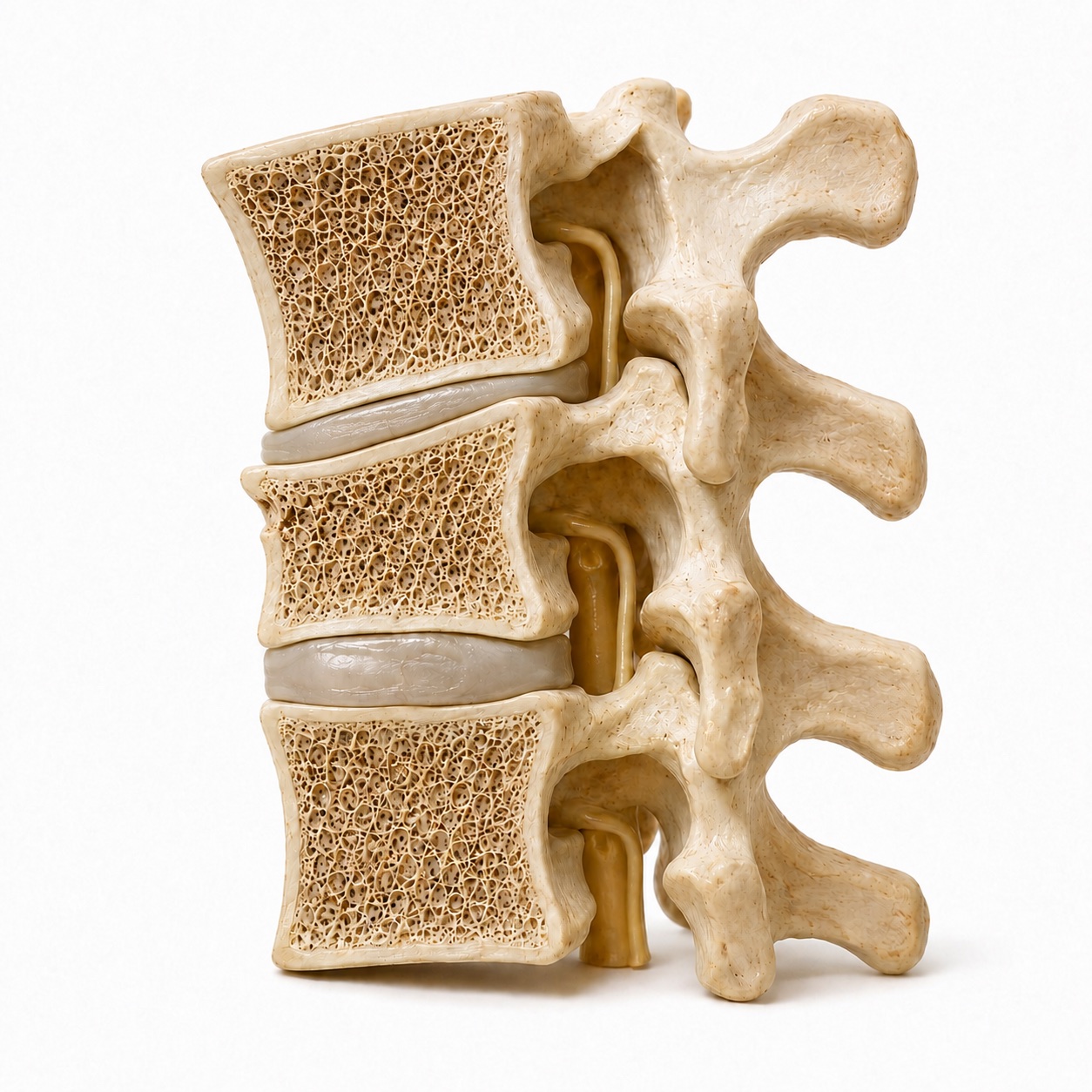
Illustrative model showing vertebral bones and discs
Vertebral anatomy

Spinal infections

Infection can involve a disc, a vertebra, or the space around the nerves.

Symptoms and treatment decisions: Spinal infections

What is it? Bacteria, or less often tuberculosis, reach the disc (discitis), the vertebra (osteomyelitis), or the space around the nerves (epidural abscess), usually through the bloodstream. The typical picture is back pain that is constant, worse at night, and out of proportion to any injury, sometimes with fever. Diagnosis relies on MRI, blood tests, and often a biopsy to identify the organism.

When is surgery considered? Most spinal infections are treated with weeks of antibiotics guided by the culture. Surgery is considered when an abscess is pressing on the nerves or cord, when there is neurologic change, when bone destruction has made the spine unstable or deformed, or when antibiotics are not working. Dr. Boody wrote a 2018 review on evaluating and managing pyogenic and tubercular spine infections.

Alignment

The shape of the whole spine.

Seen from the front, the spine should be straight. Seen from the side, it should curve so the head sits balanced over the pelvis. Deformity is a problem with either view, and it matters most when the body can no longer compensate.

Scoliosis and spinal deformity

Alignment can change from front to back as well as side to side. Explore three examples and the questions each raises.

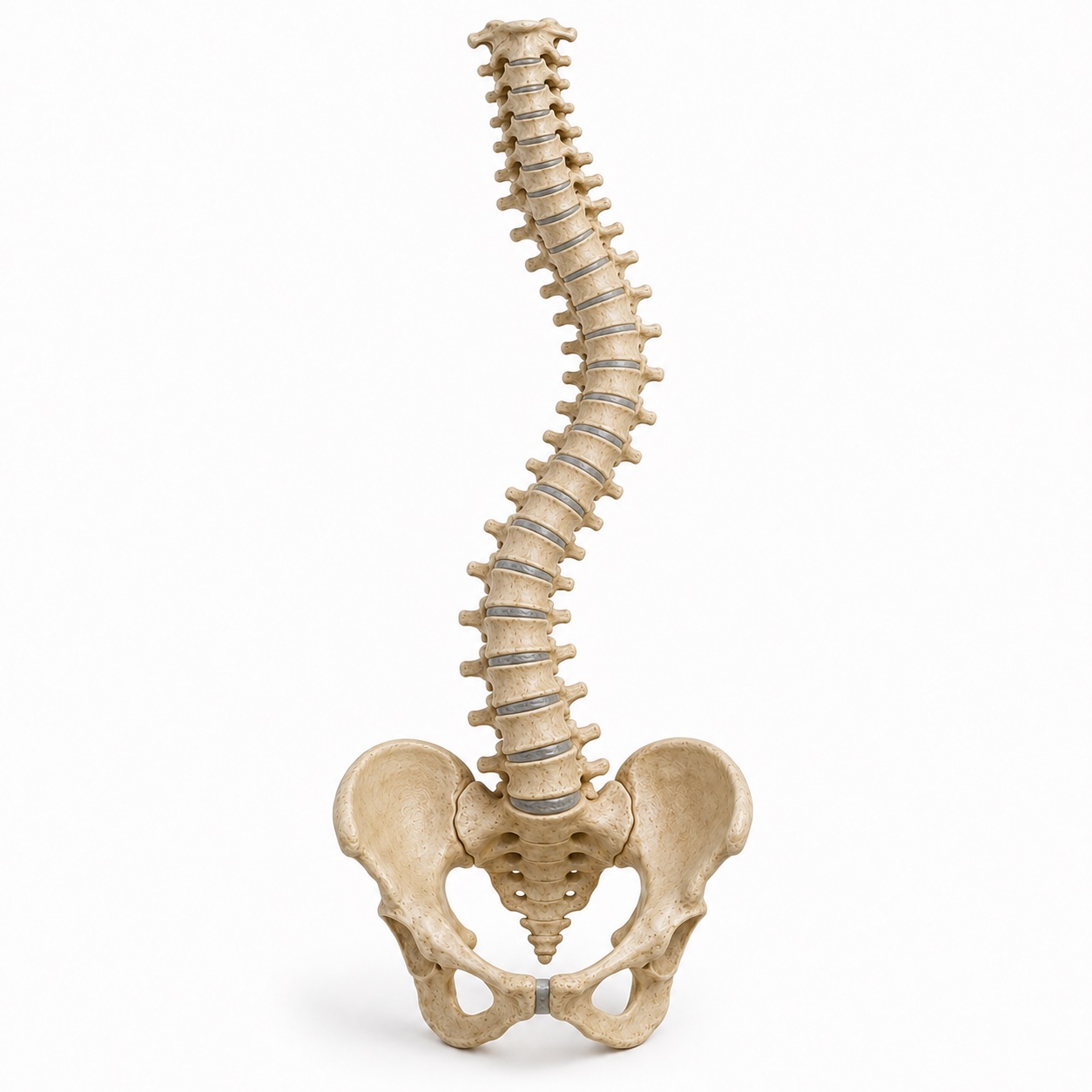
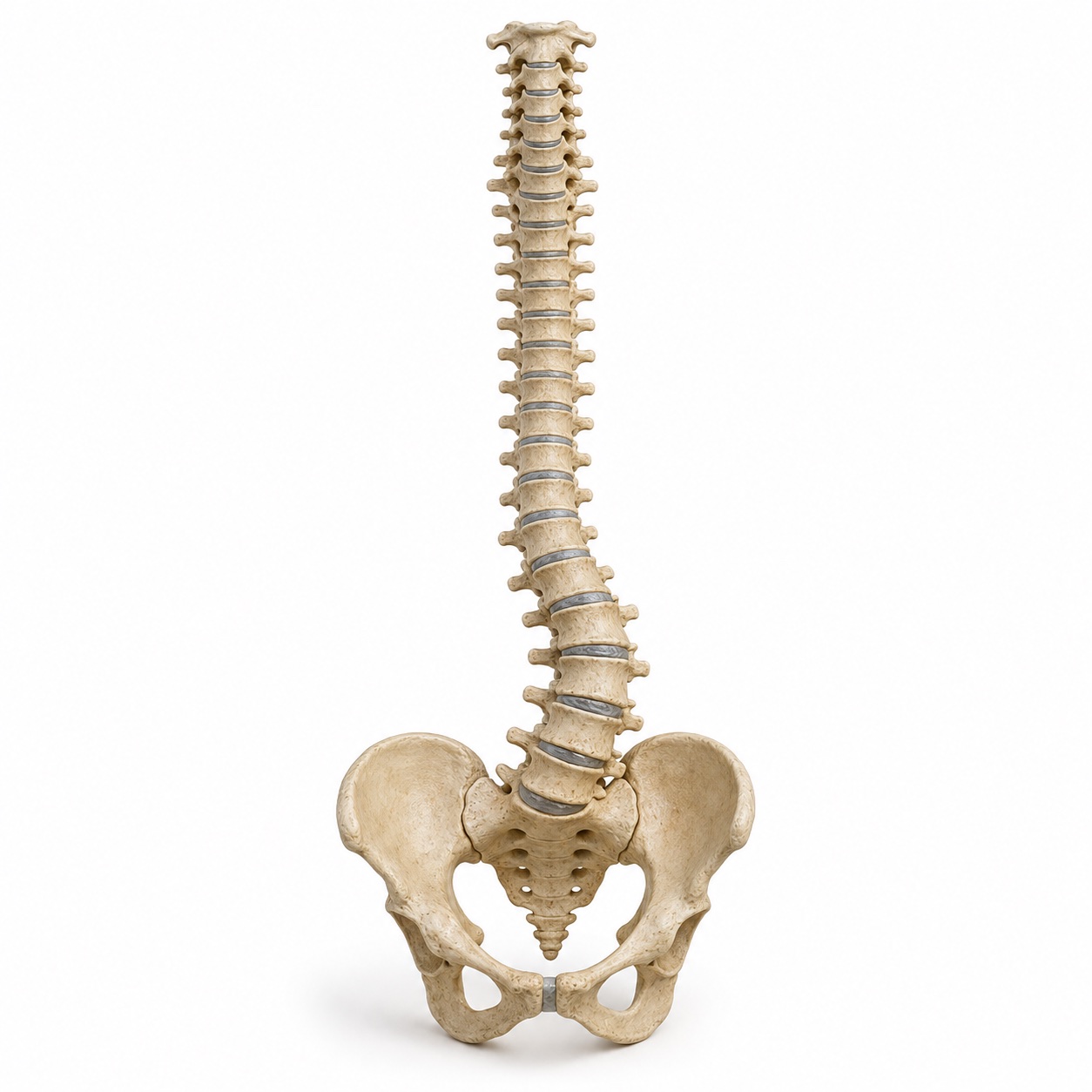
Front-view spine model with an S-shaped curve and pelvis
Front view · illustrative long-standing curve

A curve that began during growth

Scoliosis is a sideways curve with rotation. A curve that develops in adolescence may remain into adulthood.

What guides careGrowth, progression, symptoms, and the size of the curve help guide observation, bracing, or a discussion of surgery.
Front-view spine model with uneven narrowed lumbar discs and a lower-back curve
Front view · illustrative degenerative curve

Uneven wear can change alignment

In adults, discs and joints can wear unevenly and create a curve, often in the low back.

What guides careThe evaluation looks at pain, walking tolerance, nerve symptoms, and whether the alignment is responsible.
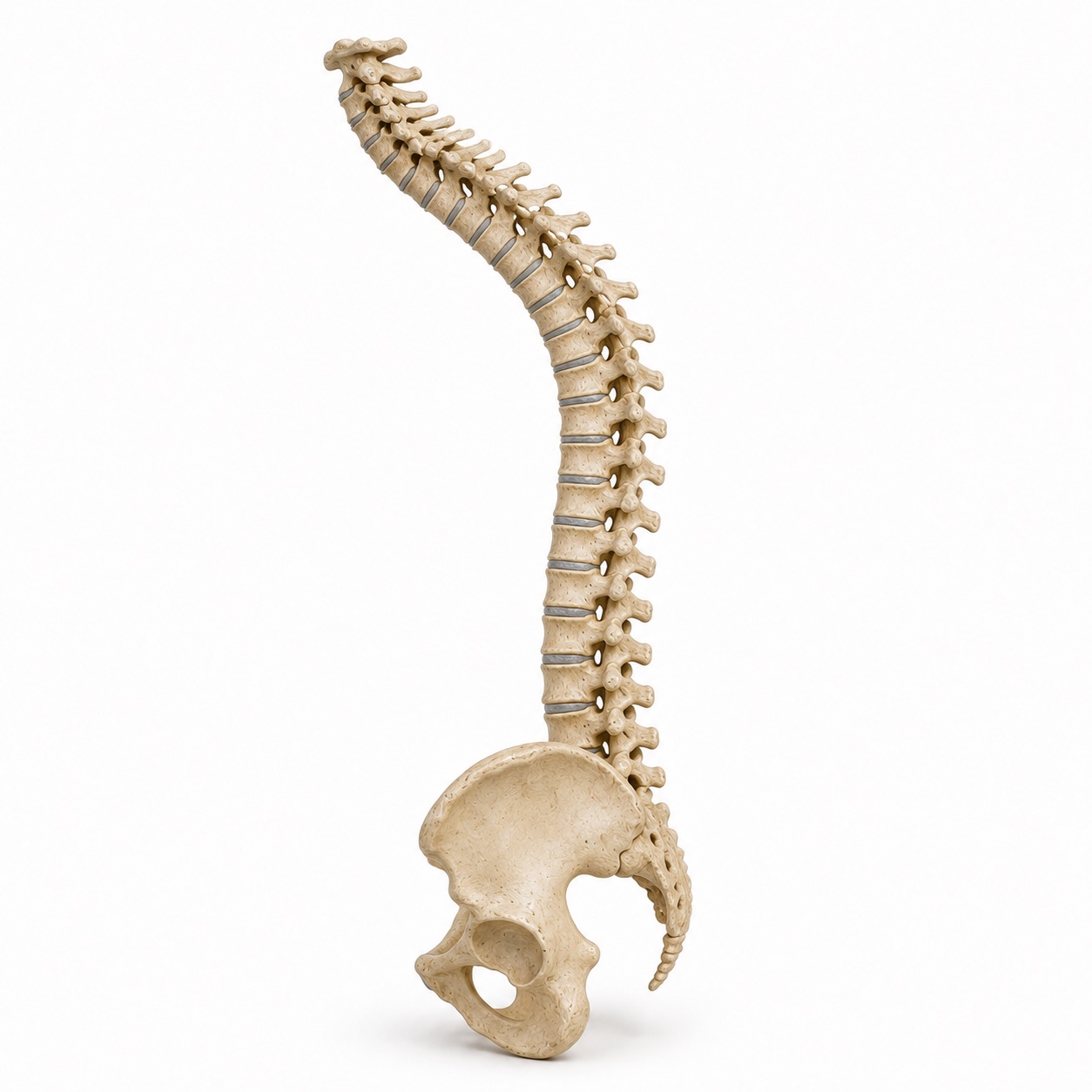
Side-view spine model with reduced lumbar curvature and the upper spine leaning forward
Side view · illustrative forward imbalance

Balance also matters from the side

Changes in the normal side-view curves can make it harder to stay balanced over the pelvis.

What guides careThe surgeon considers the whole spine and the effort required to stand upright, along with symptoms and imaging.

These are illustrative models, not patient scans or measurements of curve severity. The pictures alone do not determine whether someone needs surgery.

Symptoms and when surgery is considered

What is it? Scoliosis is a sideways curve with rotation; kyphosis and flatback are losses of the normal side-view curves. In adolescents, scoliosis usually appears during the growth spurt with no known cause and is often painless. In adults, deformity comes from discs and joints wearing unevenly, or from a curve that was present since youth and has progressed, and it tends to bring pain, fatigue, and nerve symptoms as the body works to stay upright.

When is surgery considered? For adolescents: curves are watched while growing, braced if they are progressing, and operated on when large enough that they will keep worsening into adulthood. For adults: when pain, walking tolerance, or nerve symptoms fail conservative care and the alignment itself is the cause. Deformity correction is a major operation; Dr. Boody explains the size of it, what it fixes, and what it cannot before recommending it.

Appointments

Not sure which of these is yours? That is what the visit is for.

Bring your imaging and the story of your symptoms. You will look at the pictures together and leave knowing what is wrong and what the options are.